
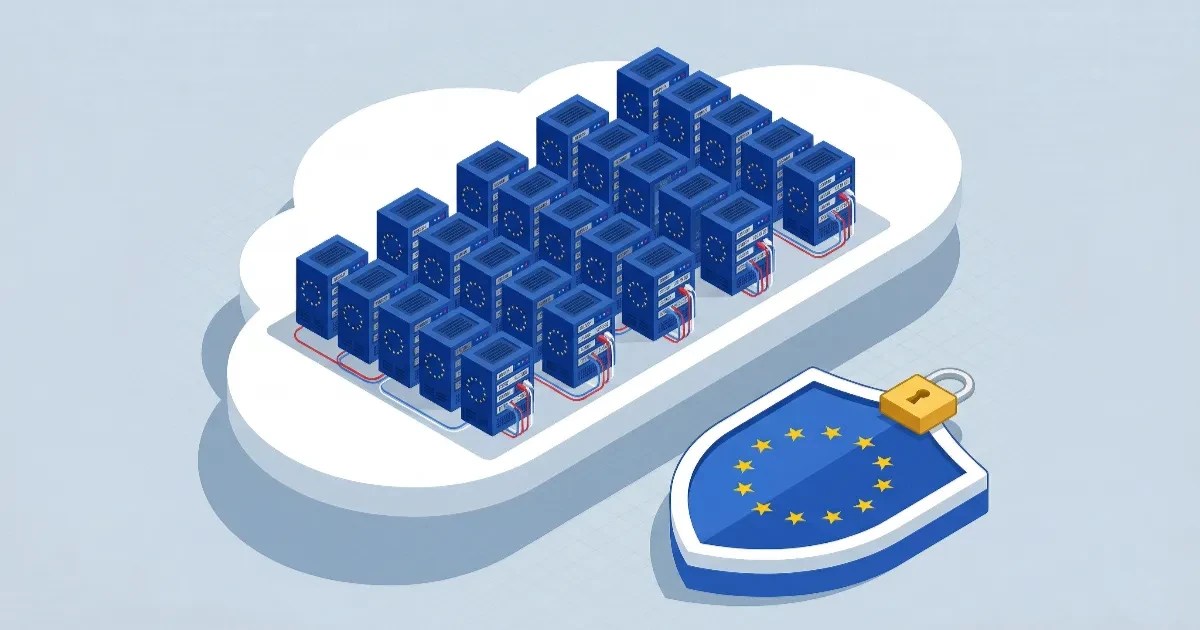

You’ve probably heard the term. But what does data sovereignty actually mean for a business your size, and what should you do about it?
What data sovereignty actually means
Data sovereignty is a simple concept with complex implications. It means that your data is subject to the laws of the country where it’s stored and processed, and that you, not a vendor, have ultimate control over it.
That sounds obvious. But in practice, most European businesses have already given up data sovereignty without realizing it. If your email runs on Microsoft 365, your files live on Google Drive, or your CRM sits on Salesforce, your business data is controlled by American companies operating under American law. Even if it’s stored in a European data center.
This matters because of a single piece of legislation: the US CLOUD Act. It gives American authorities the legal power to demand data from US companies regardless of where that data is physically located. A server in Frankfurt doesn’t protect you if the company running it is headquartered in Seattle.
Why it matters now
Data sovereignty used to be a topic for governments and large enterprises. Not anymore. Three developments are pushing it onto the agenda of every European business, regardless of size.
Regulation is catching up. GDPR set the foundation. NIS2 added cybersecurity obligations. The EU Data Act, effective since September 2025, gives businesses new rights over their data and requires cloud providers to support switching. Together, these regulations are making data sovereignty a practical requirement, not just a nice to have.
Geopolitical risks are real. In 2025, the chief prosecutor of the International Criminal Court was locked out of his Microsoft account after the US government imposed sanctions on ICC officials. Microsoft’s own legal director in France admitted under oath that the company cannot guarantee European data stays out of reach of US authorities. These are not hypothetical scenarios anymore.
Your clients are starting to ask. Larger companies that fall under NIS2 are required to secure their supply chain. If you provide services to these businesses, they will ask where your data is, who has access, and under which jurisdiction your systems operate. Not having clear answers will cost you contracts.
What data sovereignty looks like in practice
For an SME, data sovereignty doesn’t mean building your own data center or hiring a team of compliance lawyers. It means making deliberate choices about four things:
Where your data lives. On servers hosted by European providers, in European data centers, under European jurisdiction. Not on infrastructure owned by a company that answers to a foreign government.
Who controls it. You should own the infrastructure or at least hold the account directly with the hosting provider. If your IT partner also owns the server, their priorities may not always align with yours.
What software runs on it. Open source software means no proprietary black boxes, no hidden data collection, and no vendor that can change the terms or cut you off. You can inspect, modify, and replace every component.
How portable it is. True sovereignty includes the freedom to leave. If your data is trapped in proprietary formats or behind egress fees, you’re not sovereign. You’re dependent.
Two common misconceptions
“We use an EU data center, so we’re fine.” Location is necessary but not sufficient. If the company operating the data center is subject to US law, your data is still exposed. Data residency is not the same as data sovereignty.
“This only matters for large enterprises.” It used to. But NIS2’s supply chain requirements, rising cyber insurance standards, and growing client expectations are bringing sovereignty to the doorstep of every SME that handles business data.
Where to start
You don’t need to overhaul everything overnight. Start by mapping your current situation: which cloud services do you use, where is your data stored, and which companies have access to it? Once you know where the dependencies are, you can make informed decisions about what to change and when.
The tools to build a sovereign infrastructure exist today. European hosting providers offer reliable, affordable alternatives to hyperscalers. Open source software covers every major business need. And managed service partners can handle the complexity so you don’t have to.
Data sovereignty is not about fear. It’s about making a conscious choice to keep control over what belongs to you.
Innoframe helps European SMEs build sovereign cloud infrastructure using open source technology on European providers. Want to understand where your data stands today? Get in touch